» Destinations » Mount Kilimanjaro
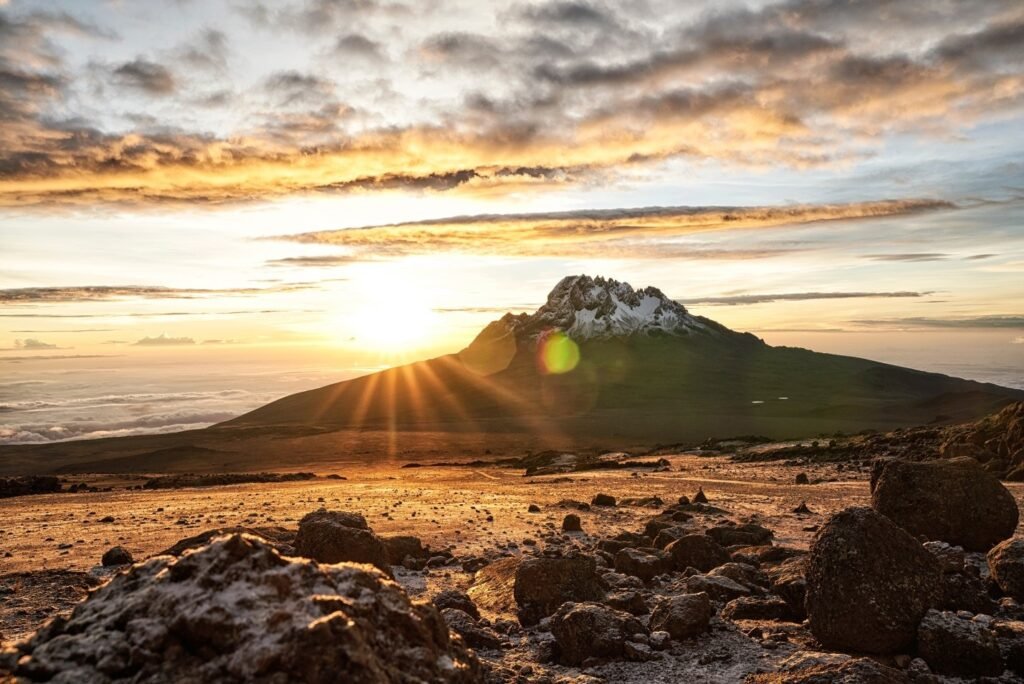
Rising proudly to 5,895 meters (19,341 feet), Mount Kilimanjaro Tanzania is Africa’s highest mountain and one of the world’s most famous trekking destinations. Located in northern Tanzania near the Kenyan border, this majestic, free-standing volcanic peak attracts adventurers, photographers, and nature lovers from across the globe.
Unlike other high-altitude climbs, Mount Kilimanjaro doesn’t require technical climbing skills. Trekkers of varying experience levels can reach the summit — a journey that takes you through five distinct ecological zones, from lush rainforest to arctic glaciers. The sense of accomplishment that comes with standing atop Uhuru Peak, the “Roof of Africa,” is simply unforgettable.
(You can combine your Kilimanjaro climb with our Tanzania Safari Packages or relax afterward on our Zanzibar Beach Holidays.)
Mount Kilimanjaro Tanzania is part of Kilimanjaro National Park, a UNESCO World Heritage Site celebrated for its ecological diversity. The mountain is made up of three volcanic cones: Kibo, Mawenzi, and Shira. Of these, Kibo is dormant but not extinct, while the other two are long inactive.
The mountain’s landscape changes dramatically as you ascend — from the green foothills and tropical forests filled with colobus monkeys to the alpine desert and, finally, the icy summit. These transitions make climbing Kilimanjaro not just a physical challenge, but also a journey through multiple climates and ecosystems in just a few days.
(Learn more about Tanzania’s protected parks on the Tanzania National Parks Authority official website.)
There are several routes available for those climbing Mount Kilimanjaro Tanzania, each offering a unique experience, scenery, and level of challenge:
| Route | Duration | Highlights |
|---|---|---|
| Machame Route | 6–7 days | Known as the “Whiskey Route,” offers beautiful views and good acclimatization. |
| Lemosho Route | 7–8 days | Less crowded, scenic, and has one of the highest success rates. |
| Marangu Route | 5–6 days | Known as the “Coca-Cola Route,” with hut accommodations. |
| Rongai Route | 6–7 days | Approaches from the north, drier, great for rainy seasons. |
| Northern Circuit | 8–9 days | The longest and most gradual route — excellent for acclimatization. |
(Explore our Mount Kilimanjaro Climbing Packages to find your perfect route.)
Despite its altitude, Mount Kilimanjaro Tanzania supports an incredible array of life. In the lower rainforest zone, you may encounter blue monkeys, colobus monkeys, bushbucks, and hundreds of bird species, including the Hartlaub’s turaco.
The alpine zones reveal striking plant life adapted to the cold and high altitude, such as giant groundsels and Lobelia deckenii. Higher up, moss-covered rocks and glaciers dominate the scenery, offering some of the most surreal landscapes in Africa.
Kilimanjaro is not only a climb — it’s an ecological journey that connects trekkers deeply with Tanzania’s natural beauty.
You can climb Kilimanjaro year-round, but the best trekking seasons are during the dry months:
| Season | Months | Conditions |
|---|---|---|
| Main Dry Season | June – October | Clear skies, cooler temperatures, best success rates |
| Short Dry Season | December – February | Warmer, excellent for photography |
The rainy seasons (March–May and November) bring more cloud cover and slippery trails, but also fewer crowds and lush scenery.
(Visit the Tanzania Tourism Board for travel updates and park entry requirements.)
Climbing Mount Kilimanjaro Tanzania is achievable for most people with proper preparation. Key factors for success include:
Physical fitness: Regular cardio and strength training help build endurance.
Acclimatization: Choose longer routes to adjust to altitude gradually.
Guides and Porters: Always climb with a licensed operator that ensures porter welfare and proper safety standards.
Gear: Bring layered clothing, waterproof boots, and thermal sleeping bags for comfort at altitude.
(Read our guide: How to Prepare for Mount Kilimanjaro Climb for practical tips.)
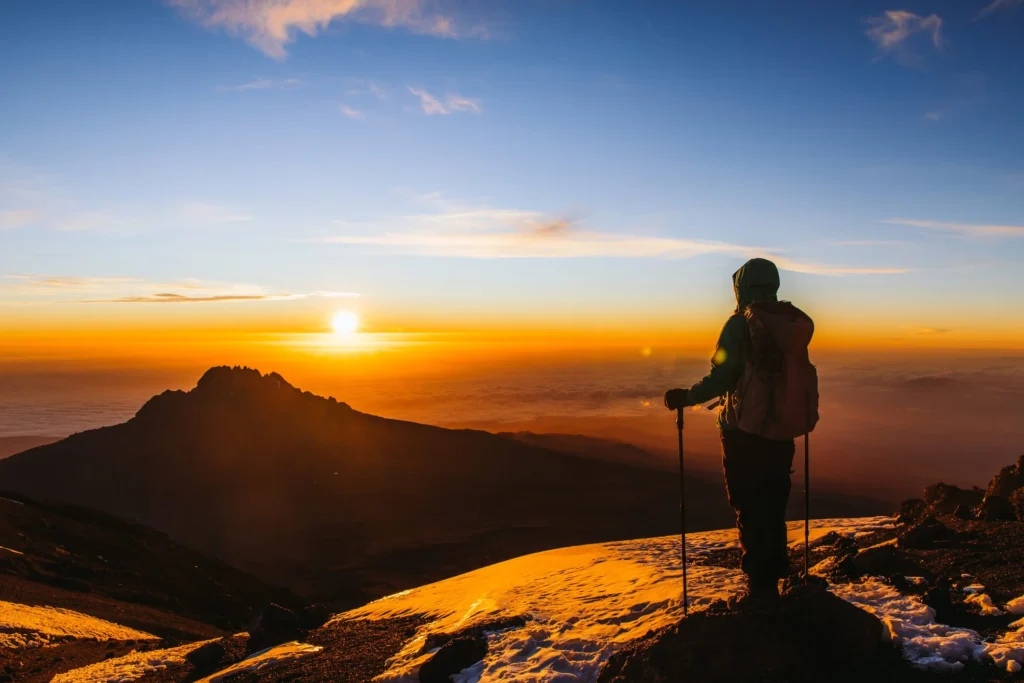
Standing atop Uhuru Peak is one of the most emotional moments a traveler can experience in Africa. As the sun rises over the horizon, the glaciers glisten in shades of gold and silver, and the vast plains of Tanzania stretch endlessly below.
This view from the “Roof of Africa” represents perseverance, teamwork, and the spirit of adventure. Many climbers describe it as a life-changing experience — a combination of physical challenge and spiritual reward that stays with them forever.
(Plan your climb with Heart of Serengeti Tanzania Safaris and conquer Mount Kilimanjaro with expert guides who put safety and success first.)